
 By dbtuser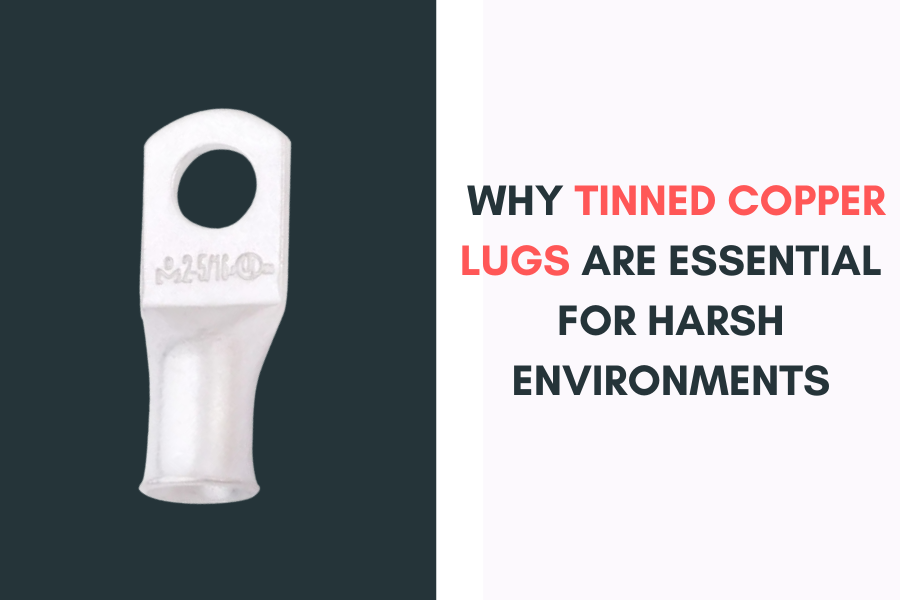
In electrical installations exposed to moisture, chemicals, salt air, or fluctuating temperatures, connector durability becomes a critical factor. Tinned copper lugs, also referred to as tinned copper cable lugs, are widely used in such demanding conditions because they offer reliable conductivity along with enhanced resistance to corrosion. These lugs are designed to maintain stable electrical connections where standard copper connectors may degrade over time.
Understanding why they are essential in harsh environments helps ensure safer and longer-lasting electrical systems across industrial, marine, solar, and outdoor applications.
Understanding Tinned Copper Lugs
Tinned copper lugs are electrical connectors manufactured from high-conductivity copper and coated with a thin layer of tin. The copper core ensures efficient current flow, while the tin plating provides a protective barrier against oxidation and corrosion.
This protective finish is especially important in environments where connectors are regularly exposed to humidity, water vapor, airborne contaminants, or corrosive chemicals.
Without this coating, bare copper can oxidize over time, which may increase contact resistance and affect electrical performance.
Protection Against Corrosion
One of the main reasons tinned copper lugs are preferred in harsh environments is their strong resistance to corrosion.
Moisture and Humidity Resistance
In humid or wet conditions, exposed metal surfaces are prone to oxidation. Tin plating helps protect the copper surface from direct contact with moisture, reducing the risk of corrosion buildup.
This is particularly useful in:
- Outdoor electrical panels
- Solar power systems
- Underground cable terminations
- Coastal installations
Salt Air Environments
Marine and coastal applications are among the most demanding for electrical components. Salt-laden air accelerates corrosion on untreated metal surfaces.
Tinned copper cable lugs are commonly used in:
- Boats and marine vessels
- Dockside electrical systems
- Offshore equipment
- Coastal solar installations
The tin layer significantly improves service life in such conditions.
Reliable Performance in Industrial Settings
Industrial environments often expose electrical components to oil vapors, dust, chemicals, and high temperatures.
In factories, processing plants, and heavy machinery systems, electrical terminations must remain stable despite constant environmental stress. Tinned copper lugs provide dependable performance by reducing surface degradation and maintaining low-resistance connections.
This helps prevent issues such as:
- Voltage drop
- Heat generation at the connection point
- Loose or weakened terminations
- Premature connector failure
Better Long-Term Conductivity
Corrosion on electrical terminals increases resistance over time. Even a small amount of oxidation can impact current flow, especially in high-load systems.
Because tinned copper lugs resist oxidation more effectively than bare copper, they help preserve consistent conductivity over long periods.
This is important in applications such as:
- Battery banks
- Inverters and UPS systems
- Grounding conductors
- High-current industrial cables
Stable conductivity contributes directly to system efficiency and safety.
Suitable for Outdoor and Renewable Energy Applications
Renewable energy systems, especially solar installations, often operate in exposed environments for years.
Rain, dust, UV exposure, and temperature changes can all affect connector reliability. Tinned copper cable lugs are frequently used for cable terminations in solar panels, combiner boxes, battery storage systems, and grounding networks.
Their corrosion resistance makes them well-suited for long-term outdoor performance.
Installation Considerations
To maximize performance, proper installation remains essential.
The conductor must be correctly stripped and inserted fully into the lug barrel. A suitable crimping tool should be used to create a secure mechanical and electrical bond.
In harsh environments, heat shrink tubing is often added after crimping to provide extra insulation and moisture protection.
Conclusion
Tinned copper lugs are essential for harsh environments because they combine excellent electrical conductivity with superior resistance to corrosion, oxidation, and environmental wear. Whether used in marine systems, industrial settings, outdoor electrical panels, or renewable energy installations, they provide the durability needed for reliable long-term performance.
By choosing the right lug type and ensuring proper installation, electrical systems can maintain safety, efficiency, and service life even under challenging operating conditions.