
 By dbtuser
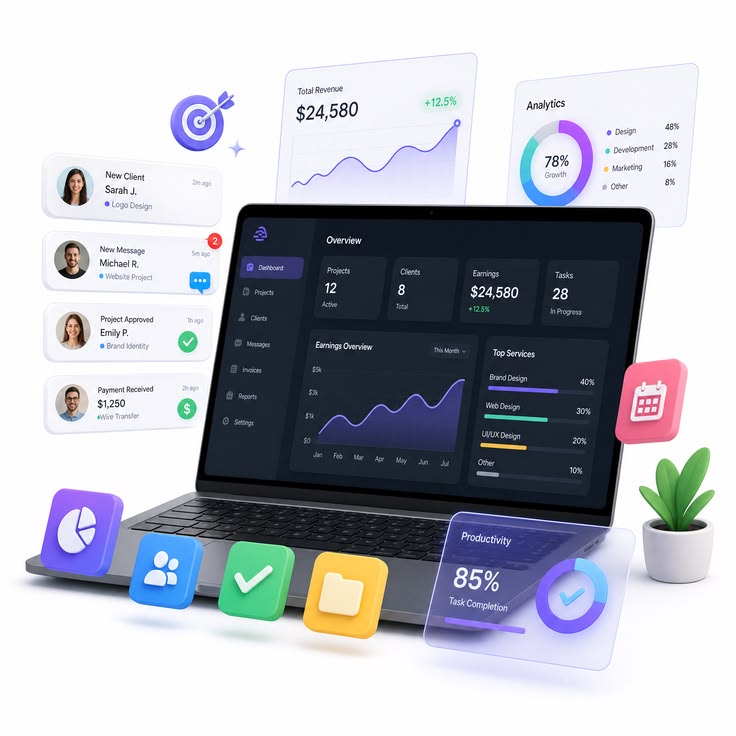
So it’s not enough to sell a quality product or service to have a successful business. In addition to managing the business, business owners are required to manage customers, employees, payroll, financial records, and other day-to-day business administration tasks. These tasks can be time-consuming and cumbersome when they are done by hand. These processes can be streamlined and business efficiency increased with a CRM system and QuickBooks Payroll.
A Customer Relationship Management (CRM) system can assist companies to arrange customer details, manage sales activities, and enhance communication. QuickBooks Payroll assists businesses in handling employee payments, payroll records, and administrative tasks associated with payroll. These solutions can complement each other to form a more structured working environment and to help companies reach their business objectives.
It is important to understand the importance of a CRM system
A CRM system is a crucial business tool that can help you handle interactions with customers and potential customers. It offers a single place to keep customer information, follow up on sales prospects, maintain interaction logs, and track customer activity.
If you don’t have a CRM platform, workers might have to sift through emails, spreadsheets, and various documents to locate customer details. This can hinder daily activities and lead to overlooking crucial information.
Customer management becomes easier with a reliable CRM system, as it has organized information readily available. An automatic record of interactions with customers can be seen by sales representatives, who can also use this information to determine the customer’s needs and make contact with potential buyers.
The following are some key features in CRM:
- Customer contact management
- Track and manage leads using a sales management system.
- Customer communication history
- Scheduling and reminding tasks.
- Sales performance reports
- Marketing campaign management
- Customer support tracking
These features can help businesses deliver better customer service and foster better business relationships.
QuickBooks Payroll Enhances Payroll Management in a Multitude of Ways
One of the critical tasks that is essential for any business irrespective of its size is payroll processing. Employees want their wages paid on time, and employers want to have the correct wages recorded and to comply with tax laws.
QuickBooks Payroll offers a range of features that can assist businesses in managing employee data and handling payroll operations. Depending on the subscription and features offered, businesses may use it to perform payroll calculations, organize payroll schedules, view payroll reports, and complete some payroll tax tasks.
It’s easy to see how manual payroll processing can become complex with varying employee salaries, hours worked, overtime schedules, and deductions. With payroll software, you can streamline this information and help eliminate repetitive calculations.
QuickBooks Payroll can also aid business owners to keep their payroll records easily accessible. They come in handy when you go through employee pay, make financial reports, and handle payroll duties.
The Benefits of Combining CRM and QuickBooks Payroll
Businesses can use a CRM system and QuickBooks Payroll to better handle two important aspects of their operations.
CRM software is about customers, and QuickBooks Payroll is about employees’ payments. While they have different roles to play, they all work towards the same goal: enhancing business efficiency.
For instance, a small consultancy can leverage CRM to deal with customer inquiries, monitor initiatives, and arrange sales possibilities. Meanwhile, it can take care of employee payroll and payroll schedules with QuickBooks Payroll.
If integrations are available, companies can link their CRM and accounting systems to minimize duplicate information inputs and maximize information flow. Integration possibilities vary based on the CRM platform, QuickBooks product, subscription, and third-party applications.
Business owners need to check for system compatibility, security, and integration options before linking different systems.
Saving Time via Business Automation
The concept of time management is that it is vital for better business performance. Those who spend too much time doing repetitive administrative tasks can have less time available to focus on customer service, sales, and strategic tasks.
CRM systems have the capability of automating a number of customer management tasks. For instance, businesses can set up retargeting reminders, allocate tasks to salespeople, and get notifications for new customer inquiries, among other things.
In addition, QuickBooks Payroll can help streamline repetitive payroll duties with its automation capabilities. Companies can create payroll plans, keep staff records, and automate various payroll tasks.
Automation does NOT replace the need for human review. It is the business owner’s responsibility to check the customer’s information, employee records, payroll calculations, and other critical financial information.